
We’ve all been there–you see a negative review for your business, and your stomach sinks. Will prospective customers see this review and avoid your business?
The urge to jump in and defend your business is totally understandable. But that’s not a great course of action. As reputation management experts in Philadelphia, we have guidance to share. Read on to discover how to respond to negative reviews and examples of good (and bad) real-life responses. We’ve also included some templates to try out yourself.
Let’s dive in!
Why Respond to Negative Reviews?
Although they may not seem like it, negative reviews are the perfect opportunity to showcase your customer service. Potential customers understand that sometimes things go wrong in life. However, how you handle mistakes is more important than whether or not your company makes them.
Responding to negative reviews shows potential customers that you genuinely listen to customers and try to find solutions for their problems.
How to Respond to Negative Reviews
Consider these tips when writing your negative review responses:
- Respond promptly but not immediately – Don’t wait too long to respond to a negative review, but you should give yourself a moment to breathe and gain some emotional distance rather than reacting in the moment.
- Show that a person is responding, not a nameless brand – Have a manager or other team member introduce themselves or sign the review.
- Show that you hear and sympathize with them – Acknowledge the issues they presented in the review and their feelings about the experience.
- Apologize (if applicable) – If the issue was your fault, apologize. Even if the problem “wasn’t your fault,” you can still apologize that the reviewer had a negative experience without apologizing for the specific issue they’re raising.
- Relate feedback from your values – Connect your response to what your company cares about, like customer experience.
- Explain how you’re going to address the issue (if applicable) –
- If their issue still needs a resolution – Outline the next steps toward resolving their specific issue.
- If their issue doesn’t need resolution but you could prevent similar ones in the future – Explain how you will talk to your team or adjust your process to do so.
- Invite the reviewer to contact you to discuss the issue further – Share contact information if the reviewer wants to talk to you directly.
For example, consider this review and response from a sports bar.

This response utilizes personal outreach (in the general manager responding), thanks and apologizes to the customer, somewhat relates it to their values by sharing that the customer’s experience does not align with their policies, explains that they will coach their staff on the policies moving forward to resolve the issue, and invites the customer to reach out at the manager’s direct email.
Now, let’s look at a review for a car dealership.
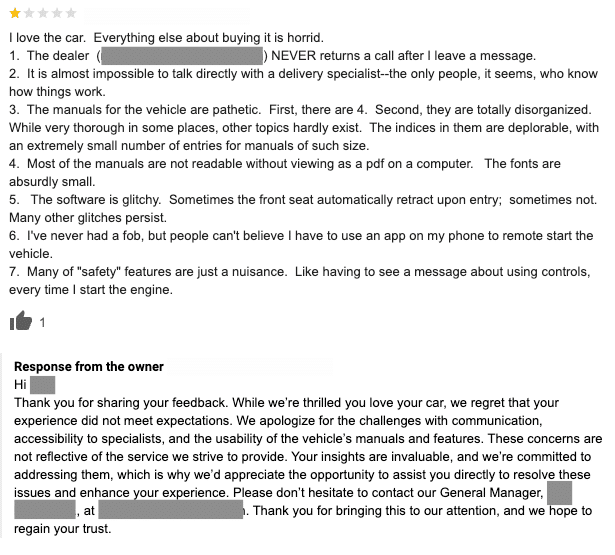
This review specifically references the problems presented in the review to show that they’re listening. It also apologizes, thanks the reviewer, relates it to their quality of service, and invites the reviewer to reach out directly to the manager.
Finally, let’s look at a review left for a Mexican restaurant.
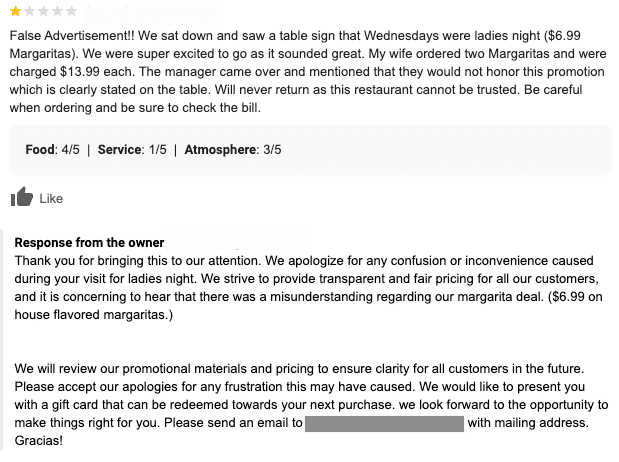
This review thanks the reviewer and apologizes for the confusion. It also relates the issue to the value of “transparent and fair pricing” while explaining that they will review their promotional materials so this issue doesn’t happen again. They also go a mile further by offering a gift card to the customer. While this is a positive offer for reviews related to price, we recommend using best judgment before offering gift cards because some people who have had a bad experience with your brand may not want another experience with your brand as an apology.
What to Avoid in Your Response
We understand the impulse to defend your business. But as we mentioned before, most reasonable people (aka the customers you want) don’t expect you to be perfect. They also understand that some people leaving reviews may be dramatic or unreasonable.
Potential customers judge your responses as much as they judge the reviews. Here are some things to avoid when responding.
- Don’t be defensive – This can come off as not taking accountability and unwillingness to listen to your customers.
- Don’t be aggressive, passive-aggressive, sarcastic, or condescending – This comes off as rude and disrespectful to your customers.
- Don’t say, “We have no record of you/you’re not our customer.” – This can come off as rude, not taking accountability, and not being willing to listen to a problem. Many responses base this off of the name on the reviewer’s Google (or other platform) account, while that name might not be the name that did business with you. Avoid this unless it’s a situation where the reviewer could not be your customer, like someone referencing a service you don’t offer. Respond kindly and gently, acknowledging that you’re sorry they had a bad experience, even if it wasn’t with your business.
- Don’t blame the reviewer – Even if it is the reviewer’s fault, pointing this out makes your business look petty and dismissive.
- Don’t use the same response on every review – If potential customers scroll through your reviews and see the same response repeatedly, it seems like you don’t care. If you’re using response templates, have a few on hand to work with.
Let’s look at some examples, starting with a response to a store review.
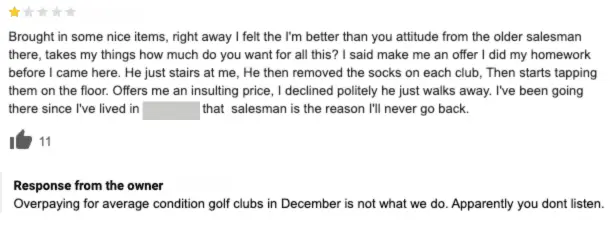
This response is outright rude and dismissive of the customer.
Next, let’s look at a review for a solar company.
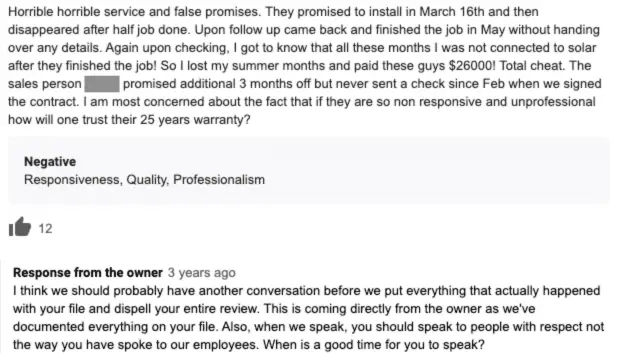
This review not only dismisses the customer’s experience but also threatens the customer without addressing anything within the review.
Let’s look at a car dealership’s response.

This car dealership review response is condescending and dismissive. It blames the reviewer while claiming that it welcomes 1-star feedback.
Negative Review Response Templates
Unsure where to start? We created some negative review response templates to get you started.
For an Issue That Requires No Further Resolution
Hi [Reviewer Name],
Thank you for taking the time to share your experience. We’re truly sorry to hear that our service did not meet your expectations, and we completely understand how disappointing that can be. Providing friendly, attentive service is a key part of our core values, and we’ll share your feedback with our team to ensure we continue to improve. We invite you to reach out at [email address] or [phone number] if you’d like to discuss anything else.
We appreciate your honesty and hope you’ll give us another chance to demonstrate the level of service we strive for.
Sincerely,
[Name, Position]
Download Our Templates for More Response Templates, Including:
- For an Issue that Requires Further Resolution
- If You’ve Tried to Help Previously, But the Customer is Still Upset
- When the Issue Isn’t Your Business’s Fault
- When the Reviewer is Not Your Customer
Review Response Templates
Please submit your information below - the review response templates will be sent to you via email.
"*" indicates required fields
Encourage More Positive Reviews
Offering a stellar experience is the first step in getting more positive feedback. But if your customer service is already up to par, there are more steps you can take to encourage positive reviews.
At Forge Apollo, we’ve used dynamic feedback software to help our clients properly direct customer feedback. Positive feedback flows to services like Google, while negative feedback goes to you to privately address before going public. As a digital marketing agency in Philadelphia offering SEO and reputation management services, we can help you build positive visibility online. Contact us today to learn more about our services.