2025 was a tumultuous year in every way, and that will impact how people travel in 2026. What travel industry trends will affect your destination? And what travel marketing trends should impact your strategy?
Forge Apollo is a travel marketing agency based in Philadelphia. Today, we’re sharing the travel industry trends we’re keeping an eye on and the marketing strategies we’re implementing in response to them.
Trend #1: Meaningful Experiences
One of the biggest tourism industry trends is a shift in traveler preferences towards more authentic, purpose-driven experiences. Travelers don’t just want to go somewhere pretty. They want to do something meaningful.
Travelers want to be present with experiences like a digital detox or getting out in nature to “touch grass.” They also prefer activities that allow them to connect with the local culture, such as taking a cooking class to learn how to prepare traditional dishes.
Winning Marketing Strategies
These are the trends in tourism marketing you should use to highlight meaningful experiences in 2026:
- Use storytelling in your marketing content to center your brand around community and culture, not just amenities.
- Go beyond demographics in targeting to reach niche interests, like “solo adventurers,” or “wine enthusiasts.”
- Use video content to show authentic experiences and build emotional connections, not just short, glossy ads.
For example, this video Forge Apollo created for Philadelphia’s Magic Gardens tells the emotional story of one of their pieces.
Trend #2: Quick, Intentional Escapes
As younger generations gain more market relevance and major events unfold, travel industry trends are shifting toward quick, intentional escapes.
Gen Z has started a trend of quick, one- to two-day getaways, even internationally. In fact, 52% of Gen Z travelers are planning to take more international trips in 2026. With economic uncertainty and emotional burnout, some are viewing travel as a “little treat,” and are booking last-minute, feel-good getaways as a mood booster rather than saving travel for long trips.
Event tourism is also on the rise, with events such as the 2026 FIFA World Cup, the Winter Olympics, and major festivals. In a survey of European travelers, 49% plan to travel for the 2026 FIFA World Cup games.
Winning Marketing Strategies
These marketing strategies can help your destination win in the era of quick, intentional trips.
- Create event-driven packages to attract more event-driven travelers, like “The Ultimate World Cup Weekend.” Partner with local businesses to enhance these packages.
- Optimize for spontaneous travel by creating campaigns that highlight real-time availability, proximity, or easy accessibility for quick getaways.
- Create content targeted at last-minute travelers looking to fill in smaller moments, such as blog posts about local activities or restaurants.
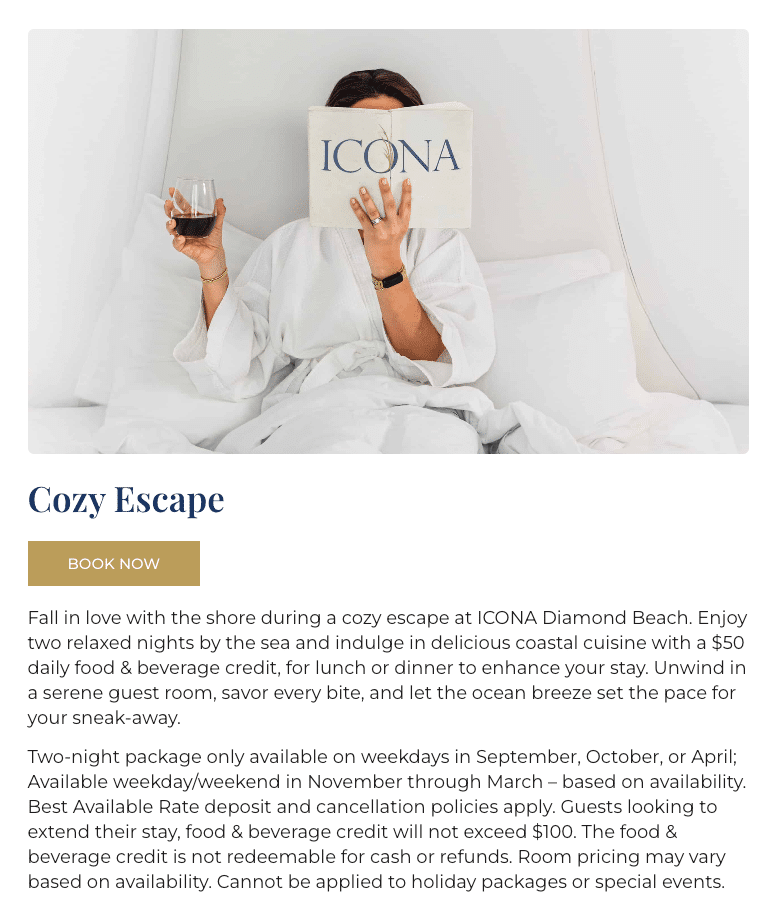
For example, ICONA Resorts offers a “Cozy Escape” package for last-minute, winter escapes.
Trend #3: Conscious, Sustainable Travel
In 2026, travelers will choose destinations and brands that align with their values, such as sustainability, inclusivity, or cultural preservation. In fact, the global sustainable tourism market is expected to grow at a compound annual growth rate (CAGR) of 14.08% between 2025 and 2034.
Some travelers will even adopt a “regenerative” mindset, seeking experiences that restore ecosystems, uplift communities, or heal cultural landscapes.
Regardless, these travelers want brands that are transparent and provide clear, measurable data on their efforts.
Winning Marketing Strategies
Reach sustainable and conscious travelers in 2026 with these marketing strategies.
- Provide transparency through initiatives such as a sustainability dashboard or content that showcases your brand’s values and how you embody them.
- Promote experiences related to conservation, such as a stay at a “regenerative” farm or a community-run lodge.
- Position your destination as a “travel twin” to an over-touristed destination. Highlight similar experiences that travelers can have in a more sustainable environment.
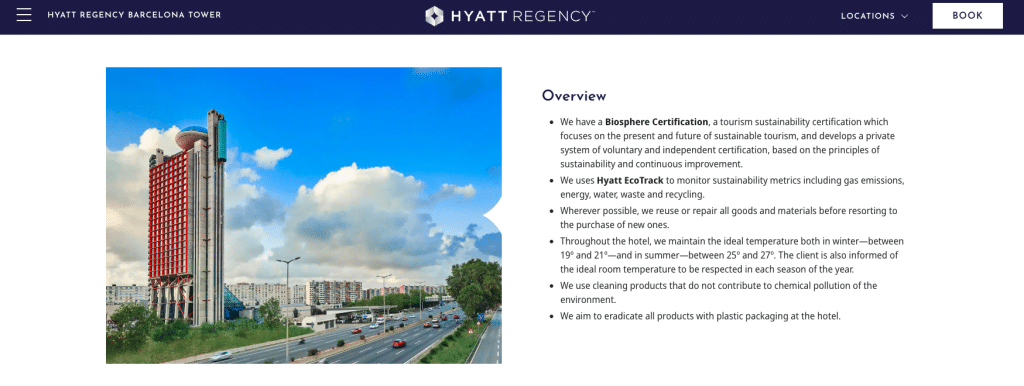
For example, this Hyatt Recency landing page outlines the location’s sustainability goals and progress.
Trend #4: AI is Part of the Journey
In 2026, more travelers will turn to AI like it’s a travel agent. 80% of travelers now use AI in some part of their travel planning and booking journey. Another report found that AI is now the number one channel for travel discovery.
Additionally, AI trends in tourism marketing are also having an impact, as traditional search engines are incorporating more AI features, resulting in an increase in “zero-click” searches.
Winning Marketing Strategies
Reach travelers in the age of AI with these marketing strategies:
- Restructure your content to be more scannable and citable by AI.
- Leverage AI for hyper-personalization in your marketing efforts, like sharing specific activity recommendations based on a traveler’s preferences.
- Position your Destination Marketing Organization (DMO) as the ultimate, trusted source for planning, rather than focusing on individual locations, as this will solidify your authority and increase your brand’s visibility in AI.
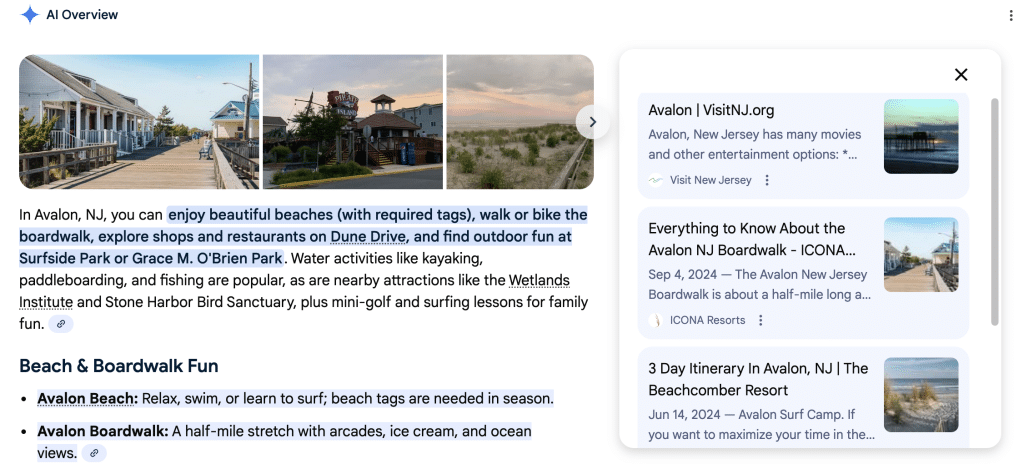
For example, Forge Apollo writes blog content for ICONA Resorts that is scannable and citable for AI, like the blog about the Avalon, NJ boardwalk cited in the AI Overview for “what to do in Avalon, NJ.”
Trend #5: Omnichannel Consistency, Authenticity, & Tailored Content
Trends in tourism marketing, not just the industry itself, will also have an impact in 2026. Travelers encounter marketing messages across various platforms, including AI tools, blogs, YouTube, and social media.
They want to have a consistent and authentic experience with brands. However, they want each piece of content to feel appropriate for the platform on which it is viewed.
Winning Marketing Strategies
These are the travel marketing strategies we suggest to help with consistency, authenticity, and tailored content:
- Develop a single core message to use across all channels, and then adapt it to suit each individual channel.
- With this fragmented journey, email marketing is having a comeback as an opportunity for authentic, “one-on-one” conversations. Create more conversational, one-on-one moments in your email marketing strategy.
- Prioritize authenticity over polish, such as choosing micro-influencers whose values align with your brand’s identity, rather than a larger-scale content creator.
For example, in their “Be More Connected” campaign, Secrets Resorts used long-form content for YouTube and short-form content for social media around the same message.
View this post on Instagram
Create a Winning Strategy
Develop a marketing strategy that can adapt to 2026 travel industry trends and attract visitors to your destination. Forge Apollo is an Emmy Award-winning travel marketing agency based in Philadelphia that can help you build an effective strategy. Reach out today to plan out your next year of marketing.