- Website Design
- Website Development
- Copywriting
- SEO
Increase in Average YouTube Views Per Episode
Increase in New Instagram Followers
Increase in Instagram Reach
Increase in Instagram Interactions
Increase in LinkedIn Engagement
The Landscape
AI has shaken up marketing strategies and consumer behavior. Website traffic to informational pages, such as blogs, has decreased across the board as more consumers get answers from AI features, such as Google’s AI Overviews, without clicking through to a page.
Citations in AI answers are still beneficial without traffic, as the more times a consumer sees your brand name, the more likely they are to convert.
The questions then become: how do you gain visibility in AI search, and how do you measure it?
Measuring a brand’s visibility in AI has been a challenge because every prompt and response is inherently unique. Even the exact same response can yield answers with different citations from the same AI engine.
The most accurate view we have of this data is what AI providers are willing to share, which hasn’t been much to-date. Recently, we got a little more from Microsoft and Google.
Microsoft recently added an AI Performance report to Bing Webmaster Tools that provides data on the number of website citations in Microsoft Copilot or its partners. Google Search Console recently rolled out its Generative AI performance report, which shows a website’s impressions in Google’s AI Overviews and AI Mode.
This new, first-hand data has given us a deeper insight into what works for gaining visibility in AI search features.
The Insights
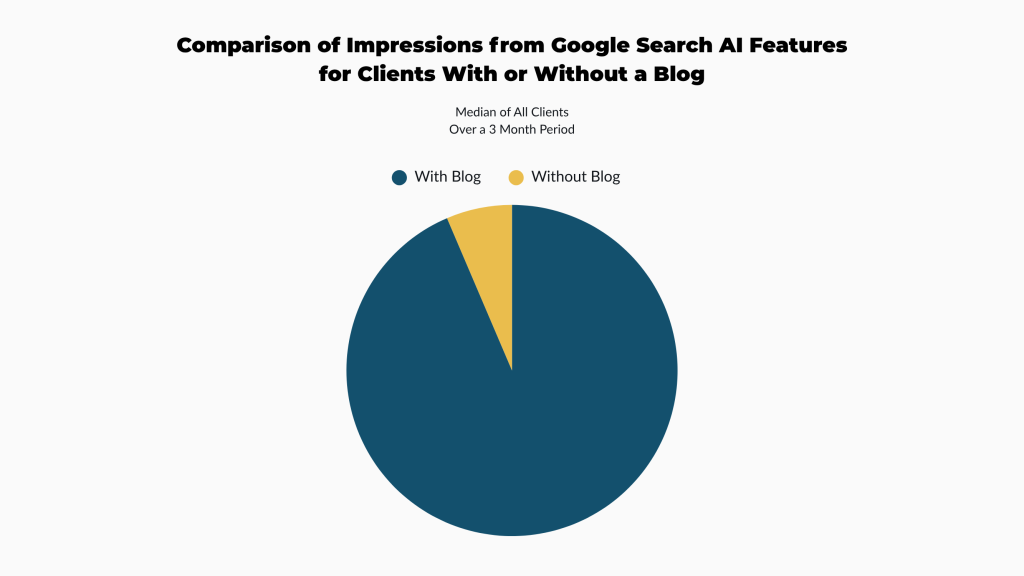
Blogging Made Clients 14x More Visible in Google’s AI Features
Over a three-month period of data, our clients with blogs had 14x more impressions in Google’s search generative AI features than our clients without blogs. Clients with blogs had a median of 15,600 impressions, while those without only had 1,070.
64% of Clients Without a Blog Had No Microsoft AI Citations
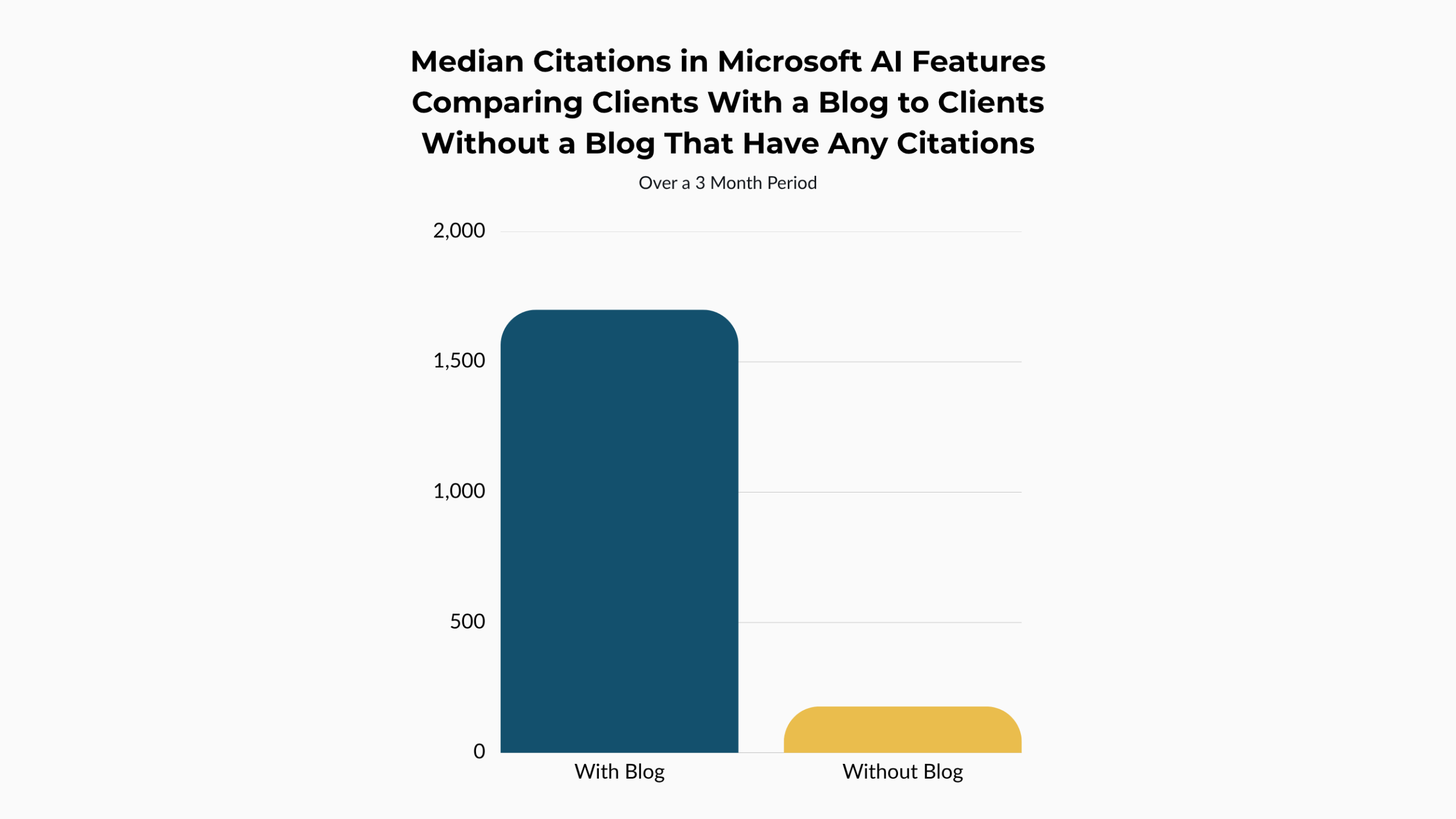
We were surprised to find that the majority (64%) of our clients without a blog had no Microsoft AI citations during this period.
Of those that had any citations, they were a fraction of what our clients with blogs received, with a median of 178 citations, while those with blogs had 1,700.
For Clients With Blogs, the Majority of Google AI Visibility Came From Blog Pages
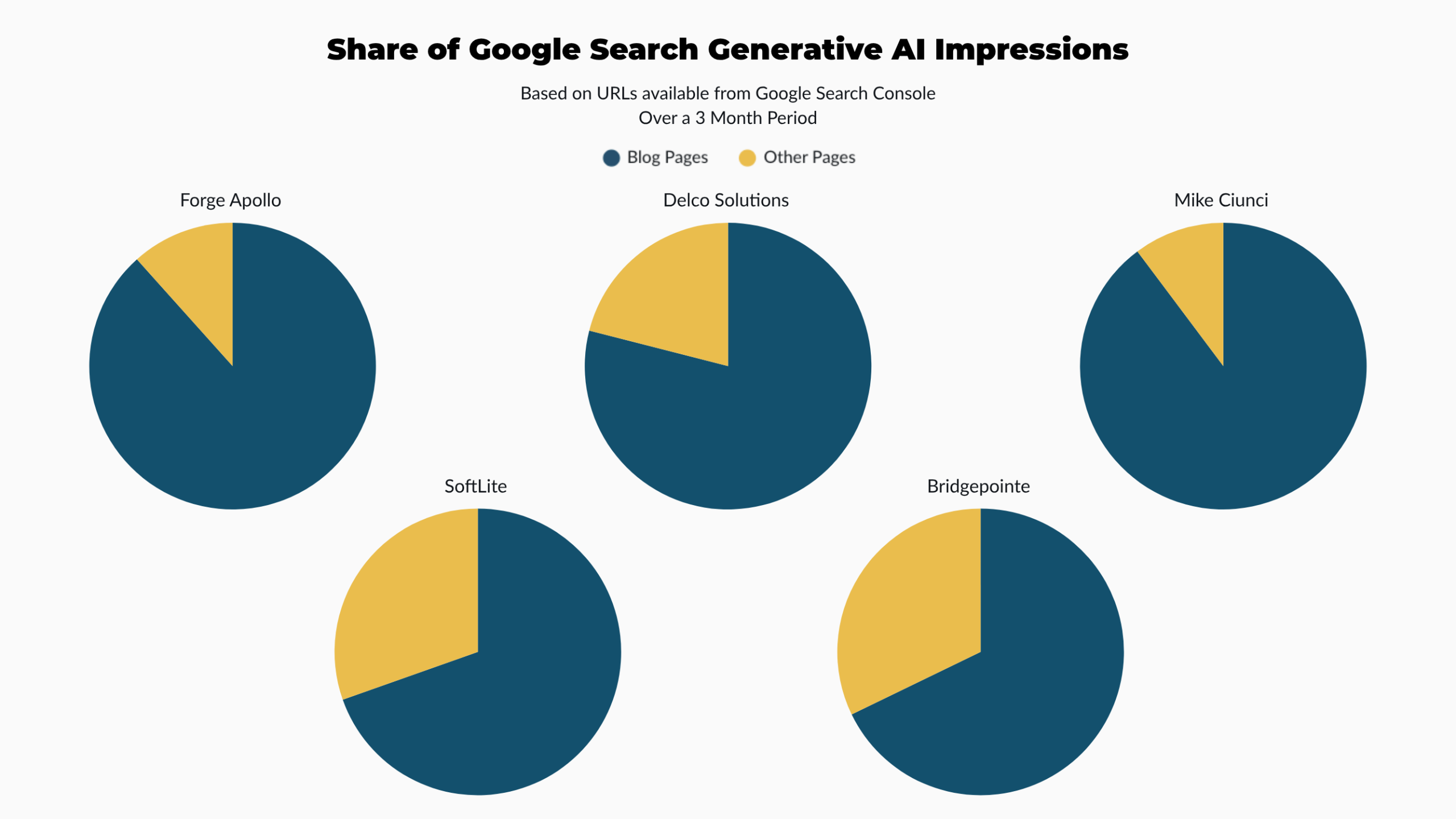
The role of blogs in visibility becomes clear when we break down which website pages received impressions during this period. For clients with blogs, the majority of Google search AI impressions went to blog pages over other pages, like homepages or service pages.
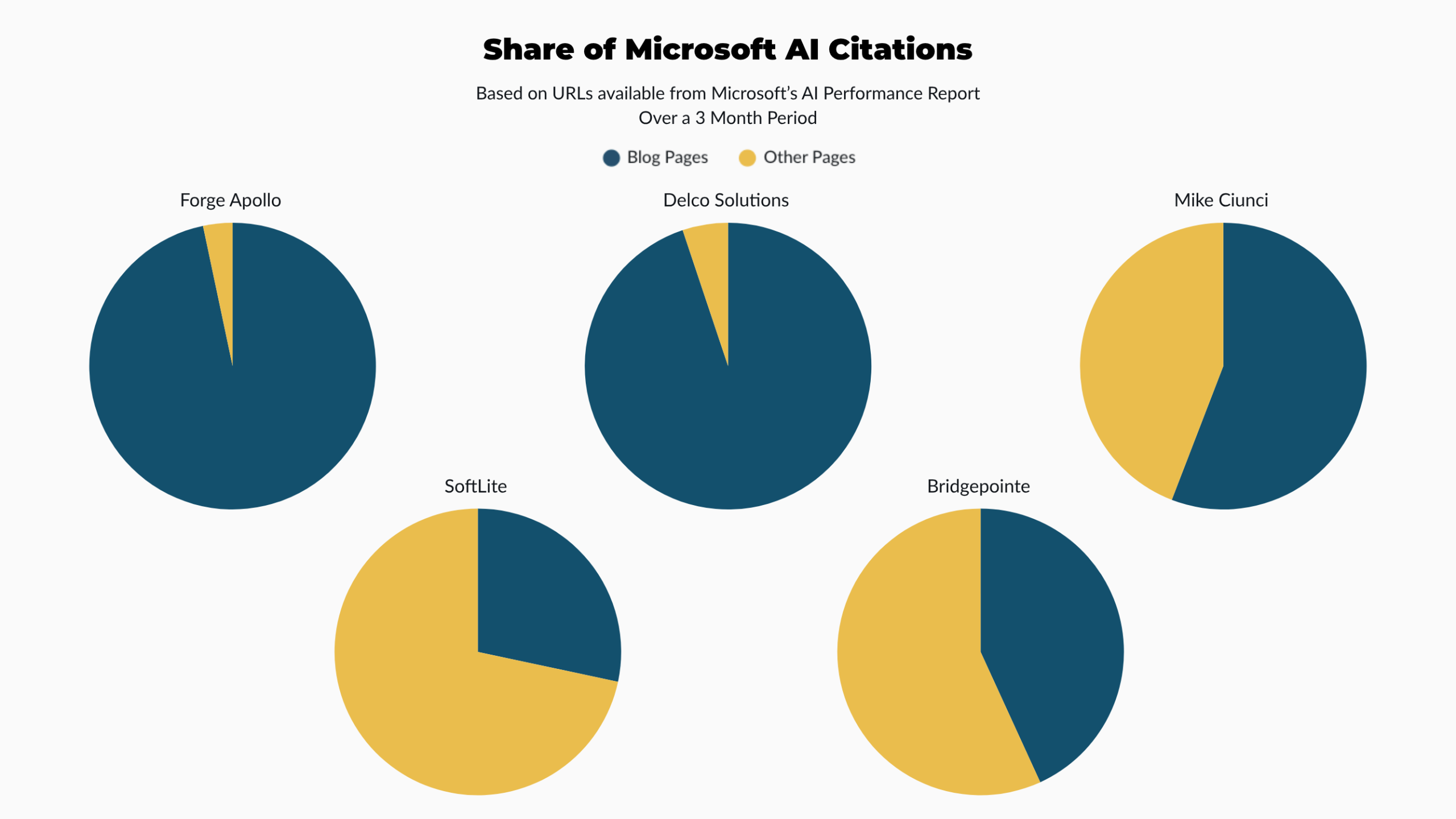
For Clients With Blogs, the Share of Microsoft Citations to Blogs and Other Pages is Mixed
In Microsoft AI citations, the results are more mixed between blogs and other pages. This may be due to other factors, such as blog timing, volume, freshness, etc., or brand-related metrics like brand name prominence.
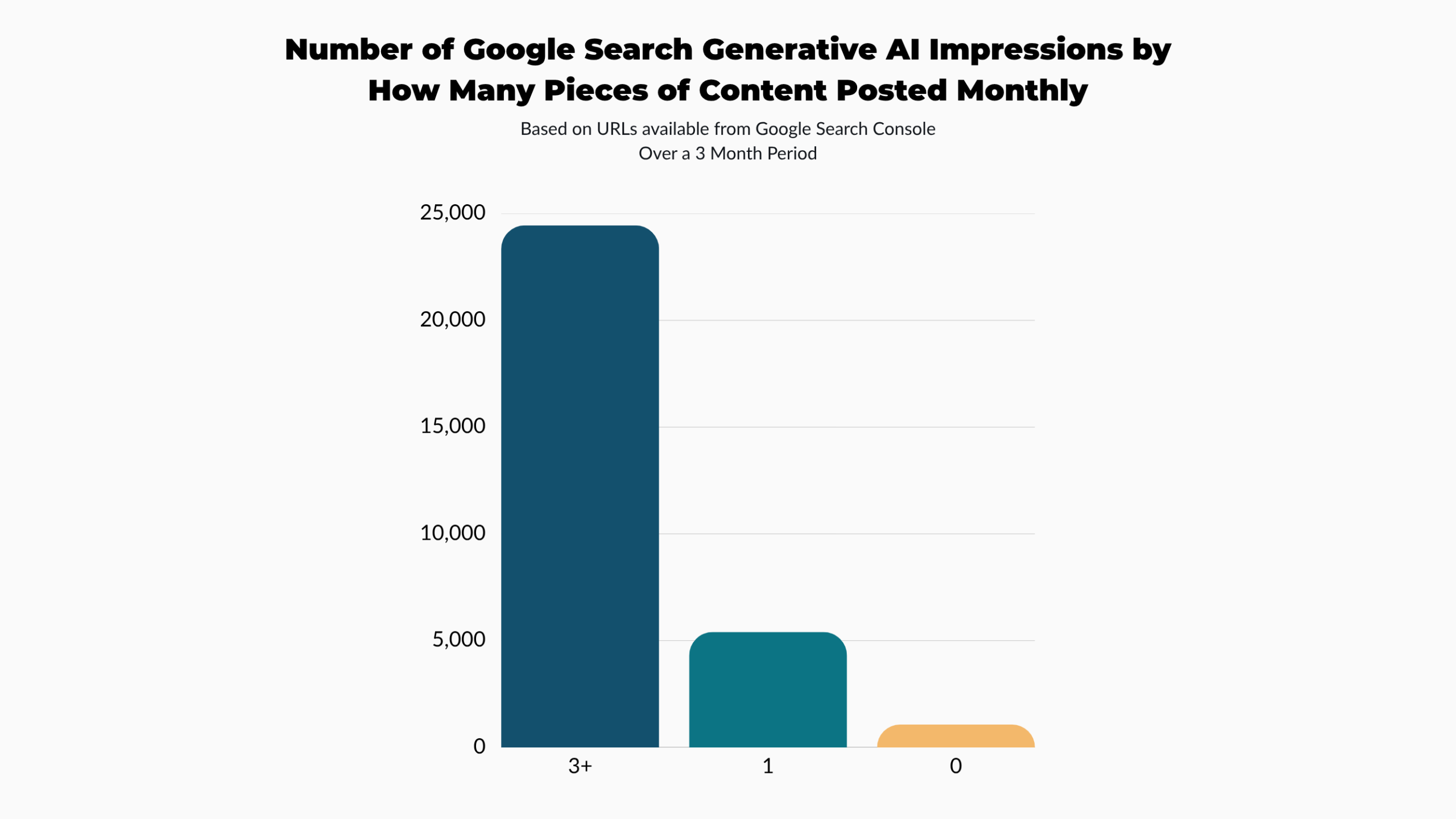
More Frequent Blogging Means More Impressions
Clients with three or more blogs posted per month had four times more Google Search Generative AI impressions than those with one post per month. It’s worth noting that these posts are still high-quality and helpful, not lower-quality content generated at high volume.