Consumer behavior is changing in the age of AI. While Google still gets the majority of search traffic, data from Ahrefs shows that search traffic in AI engines is steadily growing. A 2024 study found that 60% of Google searches ended with no clicks, a number that is likely higher with increased AI feature rollouts throughout 2025.
This means that instead of optimizing for clicks, it’s more important than ever to optimize for visibility. With all of that change, many marketers wonder if SEO is dead and have been throwing around new terms, like AEO and GEO.
With Google still securing over 40% of search traffic, traditional SEO is still very much alive. However, it must evolve to incorporate new tactics. Today, we’re comparing AEO vs SEO vs GEO and how to use them all in a new kind of strategy.
What is SEO?
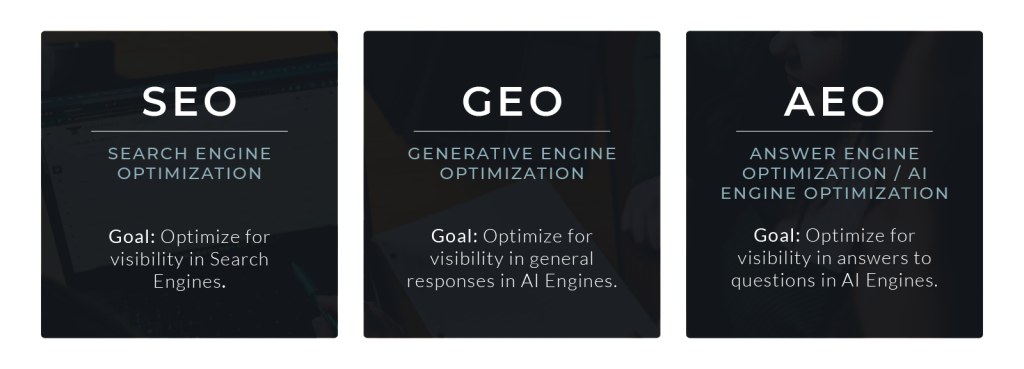
Traditional Search Engine Optimization (SEO) aims to make your brand visible in search engine results. The idea is that higher rankings and a presence in certain features bring more organic traffic to your website. SEO includes a combination of on-site and off-site tactics centered around keyword research and user experience.
On-Site SEO Tactics
On-site tactics can include:
- Ensuring search engines can scan your website
- Technical optimizations (like loading speed, structured data, and proper HTML tagging)
- Strategic content (web page content and blogging)
- Keyword usage
- Providing E-E-A-T authority signals
- Showcase first-hand experience & unique insights
- Writing content that search engines can easily use for featured snippets
Off-Site SEO Tactics
Off-site tactics can include:
- Local listings
- Digital PR and backlinks to your website
- Guest posting
- Posting content on other platforms, like social media and YouTube
What is GEO?
Generative Engine Optimization (GEO) aims to boost your brand’s visibility in AI engines, such as ChatGPT, Gemini, and Google’s AI Overviews. Strategic research for GEO differs from SEO by considering broader intent around topics, not just single keywords. This is because AI synthesizes the end result in AI responses, not single search engine result pages.
On-Site GEO Tactics
GEO can include on-site tactics like:
- Ensuring AI engines can scan your website
- Show E-E-A-T signals to build credibility
- Showcase first-hand experience & unique insights
- Technical optimizations (like structured data & HTML tagging)
- Keyword and question usage
- Writing content that AI can easily take passages from to cite
Off-Site GEO Tactics
It also includes off-site tactics like:
- Digital PR & backlinks to build authority
- Local listings
- Posting content across various platforms, like podcasts, social media, and YouTube
What is AEO?
Answer Engine Optimization (AEO) aims to optimize your brand’s content so that it appears as answers to questions in AI engines. AEO uses the same tactics as GEO but changes the optimization slightly to focus more on answering specific questions than covering broad topics.
At Inbound 2025, HubSpot introduced its new Loop marketing methodology and re-coined AEO as AI Engine Optimization, so you may also hear it referred to as this. AI Engine Optimization tactics go beyond Answer Optimization alone to optimize for your brand’s whole visibility in AI, making it a combination of AEO and GEO.
Other AI Optimization Terms
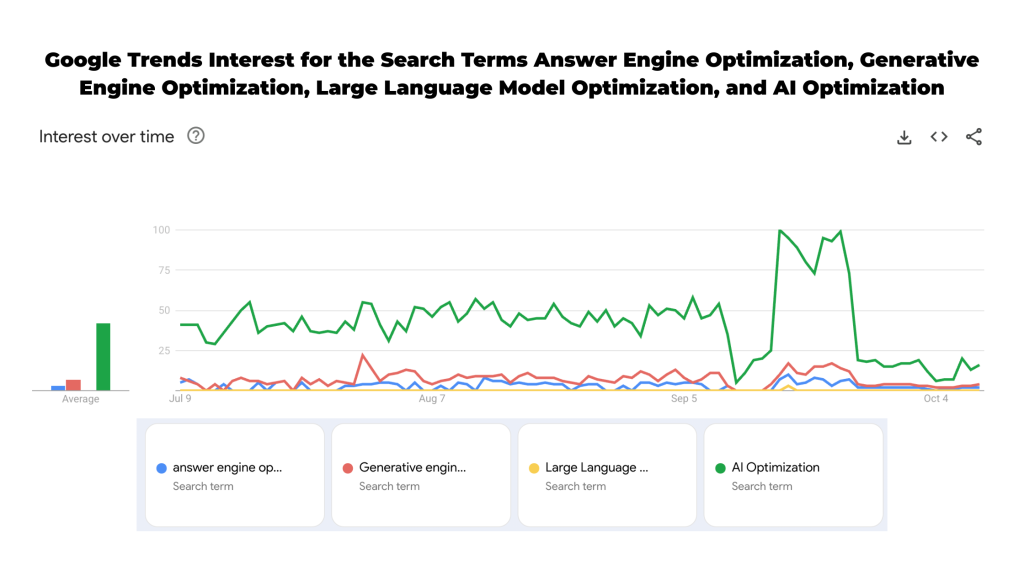
Optimizing for AI engines is a relatively new concept in the marketing industry, so we’re still settling on a name for it. In addition to AEO and GEO, you may hear LLMO (Large Language Model Optimization) or AIO (AI Optimization), but they are essentially the same thing.
The data below from Google Trends from the last 90 days shows that the industry is struggling to come to a consensus on one term.
How SEO, GEO, and AEO Work Together
When comparing AEO vs SEO vs GEO, you may notice a large overlap in optimization tactics. While the end goals slightly differ, all three aim to increase your brand’s visibility in machine outputs. Instead of thinking of it as AEO vs SEO vs GEO, we should think of it as a combined strategy that uses all three.
As an experienced SEO agency in Philadelphia, Forge Apollo has adapted to this change. Let’s explore our new strategy through the three areas AEO, SEO, and GEO have in common: technical optimization, authority building, and content.
Technical Optimization
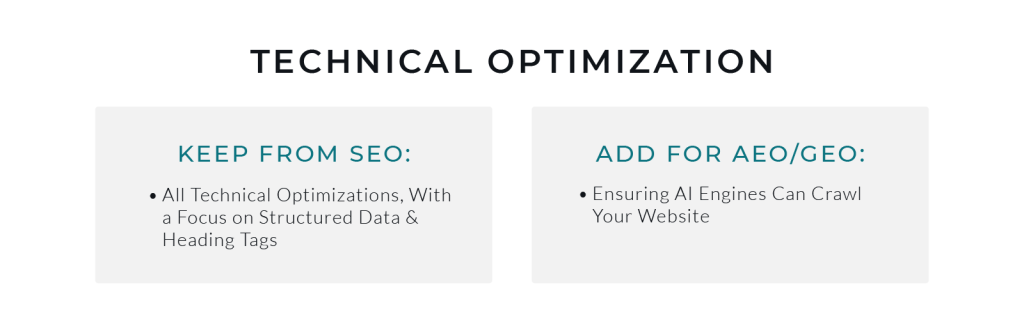
Many traditional technical SEO optimization techniques, like structured data and HTML heading tagging, also support AEO and GEO. The newest one to incorporate is ensuring that AI engines can crawl your content.
Check that nothing in your website’s technical configuration blocks AI crawling, such as your robots.txt file. For example, Cloudflare recently started blocking AI crawlers by default.
Authority Building
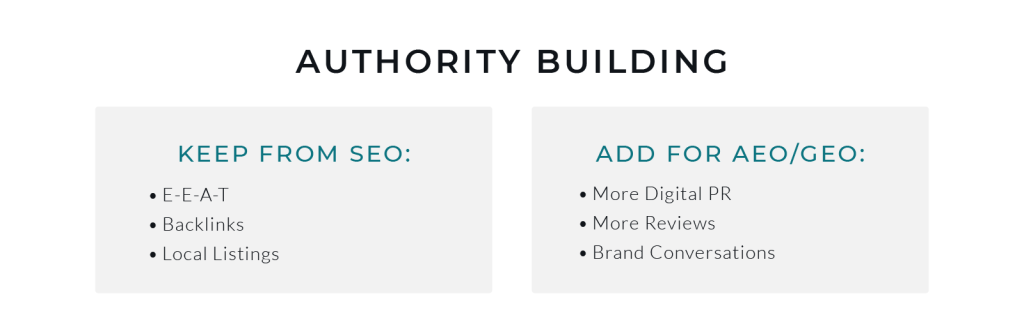
Search engines already look for brand authority signals to judge whether or not you’re a trustworthy source, but AI engines look for even more. Traditional SEO tactics, like incorporating E-E-A-T signals, earning backlinks, and having consistent local listings, are a fantastic base here.
Invest more in Digital PR, reviews, and conversations about your brand to support AEO and GEO. You need to get more people talking about your brand and have influence over those conversations to help AI gain more context around who you are and what you do.
Content
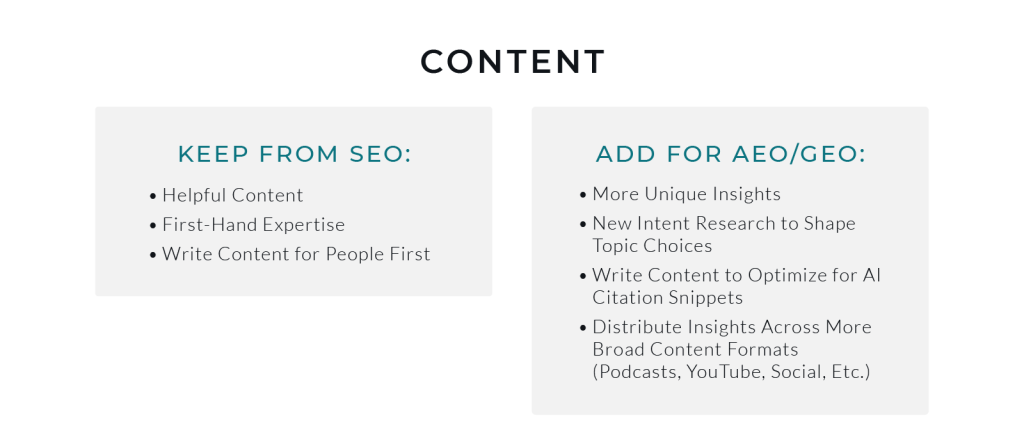
Traditional SEO strategies already implement content production, but now marketers must tweak how they create content strategies and write the content itself. Search intent on AI platforms is simultaneously broader and deeper, so content strategies must reflect that. Prioritize including unique insights and first-hand experience that AI can’t replicate on its own.
Content formats must also expand beyond blogs. Podcasts, YouTube videos, social media content, and more can all feed into AI engines, broadening the net to gain brand awareness and conversations.
Keep Your Brand Visible in the Age of AI
SEO isn’t going anywhere. In fact, Google Trends data from the last two months shows that there are still significantly more searches related to Search Engine Optimization than Answer Engine Optimization or Generative Engine Optimization.

However, it is time for SEO to evolve and incorporate GEO and AEO. You don’t need to become an expert overnight, though. Forge Apollo provides Philadelphia-based GEO, AEO, and SEO services. We’re constantly researching new AI developments and adjusting our strategies to account for them. Reach out today to explore our packages.