12 Signs You Need a Website Redesign
Your website is often one of the first things people see when they learn about your business. If your site is slow, hard to use, or outdated, visitors may leave before becoming customers. A website redesign can improve the user experience and better support your business goals.
As one of the leading web development companies in the Philadelphia area, Forge Apollo creates websites that deliver results. Jason Marshall, Senior Web Developer at Forge Apollo, recently shared his thoughts on what can keep visitors from converting.
So, how do you know if your company’s website needs a redesign? There’s no set timeline, but there are some clear signs that your site may be due for an update.
Here are some of the top signs it may be time for a website redesign.
1. Your Website Is Slow
A slow site can frustrate visitors and cause them to leave before they take action. According to HubSpot, B2B websites that load in 1 second can have conversion rates 3x higher than sites that take 5 seconds.
A lot can slow down a website, like:
- Large images and videos
- Unnecessary scripts
- Outdated code
- Hosting
- Other technical issues
Tools like Google’s PageSpeed Insights can help identify these issues. We generally use a score of 70 as a benchmark, so if a website scores below 70, there are usually performance issues worth addressing.
However, the score is only part of the picture. We also look at how your site actually performs across desktop and mobile, especially on the pages that matter most to your business.
If your website consistently feels slow or certain pages take too long to load, it may be time to take a closer look at what’s happening behind the scenes.
2. Your Website Isn’t Accessible
Your website should be usable by as many people as possible, including people who use assistive technology.
The Web Content Accessibility Guidelines (WCAG) and Americans with Disabilities Act (ADA) regulations help make websites more accessible to people with disabilities. WCAG 2.2 is the current W3C Recommendation.
Accessibility is about more than adding alt text to images. Things like keyboard navigation, color contrast, readable text, form labels, captions, and clear page structure can all affect how someone uses your site.
For example, the white text over this header image does not provide sufficient contrast to meet accessibility standards.
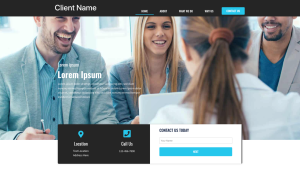
If accessibility wasn’t considered when your website was built, a redesign is a good opportunity to address those issues and improve the overall user experience. We follow accessibility best practices and make sure our websites meet applicable accessibility requirements.
3. Your Website Is Difficult to Navigate
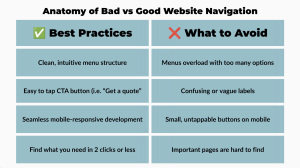
Our Website Developer, Jason, asserts that “Good navigation should feel simple on any device. Visitors should be able to find what they need in just a couple of clicks without having to think about it.”
The biggest navigation mistakes he sees are:
- Menus with too many options
- Confusing labels
- Important pages that are hard to find.
“Poor mobile navigation is another common problem,” Jason says. “If your menu is hard to open, the buttons are too small to tap, or visitors have to pinch and zoom to read it, many will simply leave. ”
4. Your Website Gets Traffic, but Doesn’t Convert
Your website might be getting traffic, but are those visitors actually reaching out?
Jason’s biggest pet peeve as a web developer is when a website makes it harder than it should be for visitors to take the next step.
Make sure calls to action like “Call Us” or “Get a Quote” are easy to find, and keep contact forms short so visitors don’t feel overwhelmed. Each page should also clearly explain how you can help, with reviews, examples, or other proof that builds trust.
If important pages get plenty of traffic but visitors aren’t taking action, something may be getting in the way.
We can help you dig into the data to figure out if the issue is your content, page layout, calls to action, or overall user experience.
5. Your Website Is Not Mobile-Friendly
A website that looks great on a desktop computer can still create problems on a phone. Text may be difficult to read. Buttons may be too small to tap. Images may not display correctly. Forms may be frustrating to complete. Navigation may be difficult to use.
We QA test these factors on websites across screens of all sizes before launch.
Your website should adapt to different screen sizes without sacrificing usability. That means more than simply shrinking the desktop version of your site.
6. Your Website Is Hard to Find in Search & AI
A modern website needs to be built with search visibility in mind from the start.
Technical issues, poor site structure, weak internal linking, missing metadata, slow performance, and content that doesn’t match search intent can all make it harder for people to find your business.
Search is also changing. People increasingly use AI-powered tools to discover information, compare options, and find businesses. That makes useful, well-organized, trustworthy content even more important.
A website redesign is an opportunity to rethink how your technical foundation, content structure, and search strategy work together. We build SEO into that process from the start, rather than treating it as something to add once the site is already built.
7. Your Content is Outdated, Thin, or Too Generic
When was the last time you really looked at your website content?
You may have:
- Outdated services or pricing
- Old statistics or information
- Former employees listed on your team page
- Incorrect contact information
- Pages that no longer reflect what your business actually does
We commonly see pages that technically contain the right information but don’t give visitors much reason to keep reading.
Today, publishing more content isn’t enough. Your website should provide useful information, demonstrate your expertise, answer real questions, and give visitors something they can’t get from a generic AI-generated paragraph.
A redesign gives you a chance to step back and ask whether your content still represents your business and gives your audience a reason to choose you.
8. Your Website Has Errors or Outdated Pages
Broken links are only one type of website problem.
We have seen missing images, broken forms, outdated downloads, incorrect contact information, 404 pages, old redirects, and pages that no longer serve a purpose, all of which can create a frustrating experience.
Some of these issues can be fixed without a full redesign. But if your website has accumulated problems over the years, it may be a sign that it needs a more extensive cleanup.
Regular website maintenance can help catch these issues before they become bigger problems.
9. Your Website No Longer Looks or Feels Like Your Brand
Your website should reflect the business you are today, not the business you were several years ago.
Maybe you’ve rebranded or expanded your services. Or maybe your website simply doesn’t match the quality of the experience you provide.
We recommend looking at your website alongside your current logo, colors, photography, messaging, and other marketing materials. Does everything feel like it belongs to the same brand?
If the answer is no, a redesign can help create a more consistent experience.
10. Your Team Can’t Easily Update the Website
Your marketing team shouldn’t need a developer every time they want to change a headline, add a new page, update a service, or publish a blog.
If making a small change is difficult, time-consuming, or likely to break something else on the site, your current setup may be holding your team back.
When we build websites, we consider how easy they’ll be for your team to manage and update.
This is especially important as your business changes. A website that was difficult to update at launch will only become more frustrating as new content and pages are added.
11. Your Website Doesn’t Support Your Current Business Goals
If your website isn’t generating the results you need, something may be getting in the way. One common culprit is your website’s navigation. If visitors can’t quickly find what they’re looking for or figure out what to do next, they’re more likely to leave without taking action.
When we review website data, we look at which pages get the most traffic and where visitors drop off. Your messaging, calls to action, page layout, forms, navigation, or overall user experience could all play a role.
12. Your Website Feels Outdated
Sometimes you can just tell when a website hasn’t kept up.
Pages may feel crowded, navigation may be clunky, or the site may simply look like it was built for a different era of the internet. For example, when we first started working with the Ukrainian Museum Library, their website looked like it hadn’t been updated in decades.
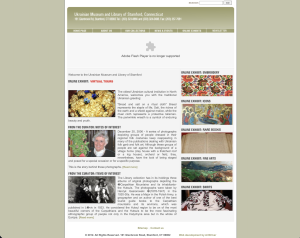
We updated their design to make it easier for visitors to discover and explore their collections.
Is It Time for a Website Redesign?
A website redesign is an opportunity to take a closer look at how your website works, what your visitors need, and whether the site still supports your business.
If several of these signs sound familiar, it may be time to take a closer look at your website and identify what needs to change.
From strategy and content to design, development, SEO, and ongoing support, the right redesign can give your business a website that is easier to use, easier to manage, and better equipped for where you’re headed next.
Ready to take a closer look at your website? Contact us to discuss your goals and see what a redesign could look like for your business.