
If you’ve tried digital marketing, you’ve probably heard that your business start a blog. Many industry experts, agencies, and marketing blogs push business blogging for SEO benefits.
Blogging can benefit SEO, but it shouldn’t be just for SEO. Plus, SEO isn’t the most important strategy for some businesses.
How might a business use a blog outside of traditional SEO?
As Forge Apollo’s current blog writer and Digital Marketing Manager, I’ll take you through seven ways we use business blogging for ourselves and our clients that aren’t SEO-based.
7 Ways to Use a Blog
1. Boost Your Visibility in AI Engines
SEO isn’t the only online visibility concern for businesses anymore. Now, your brand needs to stay visible in AI Engines, like ChatGPT, Google’s AI Overviews, or Gemini.
A catalogue of fresh, informative blog content gives AI Engines more material to learn who you are, what you do, and why you’re trustworthy. It also provides information AI engines can cite in their responses.
For example, Forge Apollo’s content has helped us gain visibility in ChatGPT that has resulted in multiple paying customers.

2. Topics for Podcasts and Videos
Blog topics can also provide you with subjects to discuss in other formats, like podcasts and short or long-form videos. With your audience’s attention split across multiple platforms these days, it’s important to have a presence that spreads across mediums. Use a blog as a starting point to research a valuable topic, then create content in different formats based on that content.
For example, HubSpot created the following video based on a blog post about Go to Market strategies.
3. Content for Email Marketing
Staying top of mind through email marketing will lead to clients thinking of you first as a solution to their needs.
Incorporating blog posts into email newsletters is an excellent way to provide value to your subscribers. They keep your audience engaged and encourage them to visit your website for more information.
For example, in our monthly newsletter, we include a section with a couple of recent blogs.

Plus, the more email recipients engage with your content by clicking, the more likely your content is to stay in the inbox instead of ending up in spam (check out our article on email deliverability to learn more).
If you use HubSpot for email marketing, you can set up smart rules to show different blogs to different audience subsets. This allows you to connect with your audience through hyper-relevant content.
4. Support for Sales
Blog posts can serve as a resource for sales teams to answer frequently asked questions about products, services, or policies. This allows sales personnel to share detailed responses without extra effort. Plus, it streamlines the sales process and ensures consistency in the information provided.
For example, our sales department uses blog posts covering topics like custom vs template websites, which website CMS to use, website hosting options, and more to guide potential customers through the sale of our website packages. We also have one post that explains video licensing to help potential clients understand the language of our contracts.
5. Social Media Content
Social media requires a lot of fresh ideas to keep a feed engaging. Brands can repurpose blog topics as social media content.
Sharing snippets or summaries of your blog posts on social media can drive traffic to your website. Plus, it can spark discussions among your audience, increasing engagement and brand visibility.
For example, we wrote a blog on cozy winter getaways for ICONA Resorts and turned that blog into a post on their Instagram.
View this post on Instagram
6. Boost Your Credibility
High-quality, informative blog posts can establish your business as an authority in your industry. This perceived expertise helps to build trust with your audience, which is critical for customer retention and attracting new business.
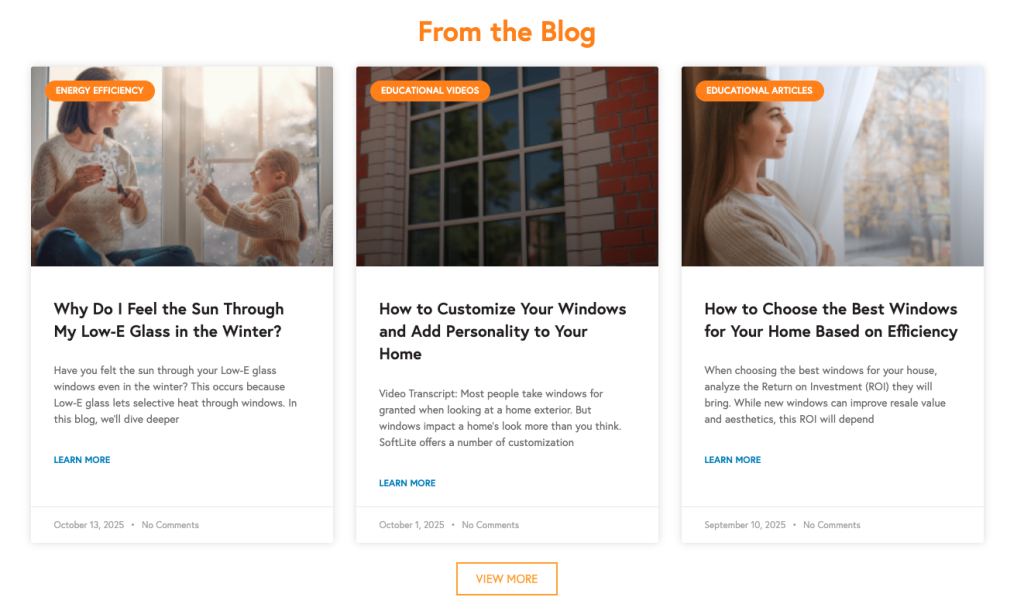
When potential customers visit your site, seeing a blog feed with high-quality content on relevant topics frames you as an expert in your industry.
For example, SoftLite Windows’ blog feed on their website homepage positions them as the experts on all things replacement windows.
7. Nurture Your Audience
Potential and current customers may encounter your brand in all buyer journey stages. A blog allows you to share content that meets them at each stage and helps nurture them to the next one for a smoother sales process.
Blog Topic Ideas
If your brand feels like it can’t keep up with a blog, a content writing service from Forge Apollo can help. Or, use these blog topic ideas to expand your idea of what content goes on a blog and inspire your strategy.
- Spotlight an employee or department
- Share your take on a piece of industry news
- Share in-depth answers to frequently asked questions
- Share tools, resources, or tips your clients or customers may find helpful
- Note trends in the industry that you’re seeing
- Explain how your audience would know it’s time for your service or product and how they would find the right solution for them
- Introduce new products or services
Frequently Asked Questions
How do you measure the success of a blog post beyond SEO metrics?
Brands can measure a blog’s success through the following engagement and conversion metrics:
- Page views
- Time spent on the page
- Bounce rate
- Comments
- Shares
- Conversions like subscriber sign-ups or inquiries
Additionally, direct reader feedback can offer qualitative insights.
What are some best practices for repurposing blog content on different platforms?
Tailor blog content for each platform by adjusting the message to fit. Use concise messages for platforms like X and Threads, visually appealing posts for Instagram, and detailed summaries for LinkedIn. Incorporate direct links or platform-specific features to encourage clicks, and monitor engagement to optimize content strategy.
How frequently should a business update its blog?
The ideal frequency for updating a blog is once or twice per month up to three or four times a month. This consistency keeps content fresh and engages readers. However, quality is more important than quantity. If resources are limited, it’s best to publish high quality content less often.
How can a business effectively measure the impact of its blog on sales support and customer nurturing?
Businesses should focus on key metrics like:
- Lead generation
- Conversion rates
- Traffic analysis
- Customer feedback
- Customer retention
Additionally, feedback from the sales team can offer a deeper understanding. Finally, using advanced analytics to attribute specific sales to blog interactions can pinpoint the direct impact of blogging efforts on revenue.
Work With a Content Writing Partner in Philadelphia
While SEO is important, blogs provide far more value for your business than that alone. If you don’t feel confident in your team’s bandwidth or writing ability, the content writers at Forge Apollo can help.
We work with your team to get a deep understanding of your offering and organization so that we can create content that’s authentic to you and helpful to your audience. Plus, we offer email, social media marketing, and video production services to amplify the value of your blogs. Contact us today to get started.