In 2026, we’ve moved beyond inserting someone’s first name in an email and calling it a day. Travelers expect content that is actually relevant to them, not pretending to be.
Forge Apollo provides personalized hotel email marketing based in Philadelphia. Today, we’re walking you through five hotel email personalization tactics that go beyond just dropping in a {{first.name}}.
1. Segmentation for Hotel Email Personalization
Segmentation for hotel email marketing means separating your audience into specific lists based on shared traits, like demographic, geographic, or behavioral data. Marketers report that segmenting audiences raises open rates by 30% and click-through rates by 50%.
Once you have a segment, you can create content specifically for that audience without any fancy email software features needed.
For example, one of our New Jersey hotel clients, ICONA Resorts, likes to host events during the off-season to attract visitors. Most guests don’t want to travel far for a winter event, so we created a segment of guests within a small geographic range to share events with.
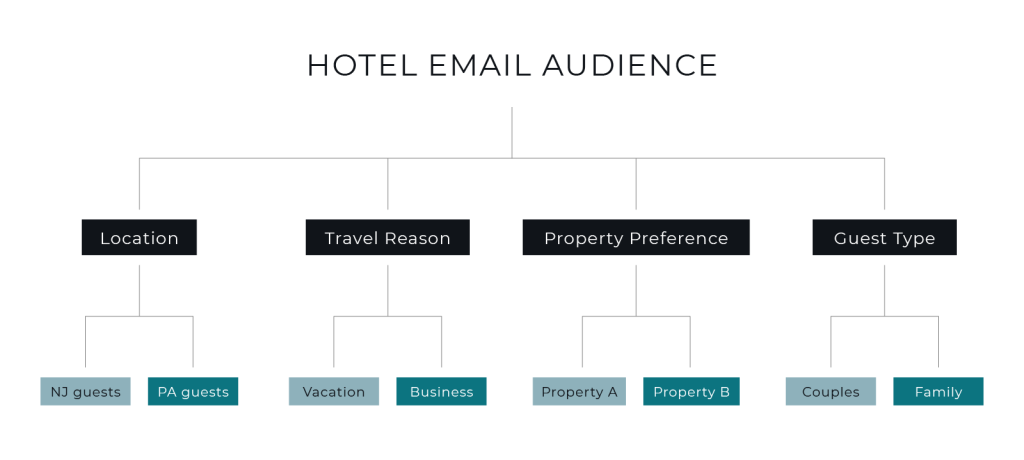
Here are some types of segments that we’ve created for hotels:
- Location: Create a segment for each major region you serve.
- Travel Reason: Create separate segments for guests traveling for personal vacations, business trips, group events, weddings, etc.
- Property Preference: If you have multiple properties, create a segment for each one.
- Guest Type: Create segments for solo guests, couples, families, friends, etc.
2. Behavioral Hotel Email Personalization
Behavioral email personalization involves sending emails in response to a traveler’s actions. It’s vital to get your timing and messaging right here so you come off as helpful, not creepy.
For example, if a guest views your hotel’s spa page, don’t instantly send them an email that says, “We noticed you’re interested in our spa, here’s 10% off.” Instead, wait a day or two and use messaging like “You deserve that message. Here’s 10% off to help you book it.”
Here are some examples of behaviors we’ve created email triggers for:
- Page View: When a traveler views a particular page, send an offer related to that page. Be careful with this one, as it can come across as “creepy” if you’re too quick or if your messaging is wrong.
- Search Abandonment: When a traveler searches for specific dates or room types but leaves without entering the checkout flow, send an offer.
- Abandoned Cart: When a traveler starts the checkout flow during booking but doesn’t finish, send an offer.
- Not Engaging With Emails: When a traveler isn’t engaging with your other emails, enroll them in a re-engagement flow.
- Lapsed Booking: When a regular guest hasn’t booked in a while, invite them back.
3. Triggered Hotel Email Personalization
Hotels can also personalize email marketing by triggering emails based on specific information or events.
For specific examples, including when to send, what to highlight, and subject line ideas, see our list of 9 automated emails your hotel should be sending.
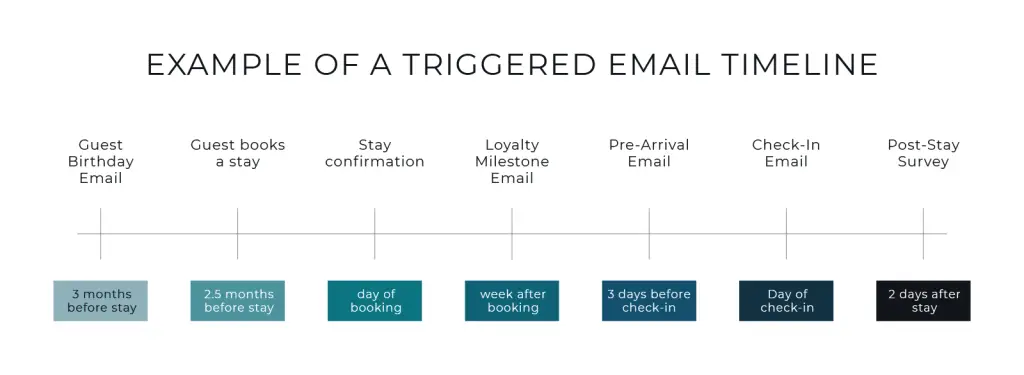
Some events we recommend creating emails for include:
- Important Dates (Birthdays & Anniversaries)
- Stay-Related (Pre-Arrival, During Stay, Post-Stay)
- Loyalty Program (Reaching a new tier)
4. Dynamic Content for Hotel Email Personalization
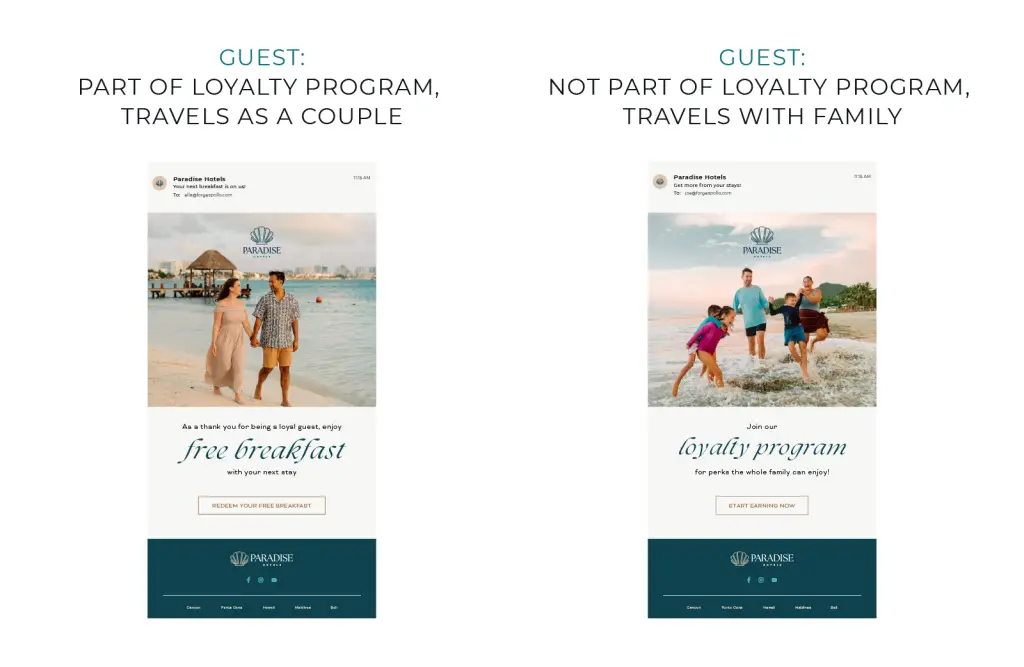
Dynamic content is the most powerful tool for planning hotel email marketing, so prioritize choosing an email tool that supports it. With dynamic content, the images and text within your emails can change based on the recipient.
This is where deep relevance comes in for your audience, because not only are they segmented and receiving automated emails based on behaviors and triggers, but the content within those emails is further personalized to data or preferences you’ve collected about them.
Here are some examples of how we’ve used dynamic content for hotel email marketing:
- Replace travel instructions with those specific to the guest’s location.
- Display different local attractions or activities based on a guest’s stay dates or interests.
- Update the imagery to reflect the guest type (families vs. couples, etc.) or the offer copy to reflect the guest’s preferences.
- Include exclusive offers based on loyalty status, with a non-member seeing an invitation to join instead.
- Swap pre-arrival upsells based on past purchases or stated interests.
- Highlight vegetarian, vegan, or gluten-free menu options to guests who have indicated dietary preferences.
5. Dynamic Hotel Email Send-Times
In the age of AI, several email marketing tools are getting smarter. They can analyze your mailing list’s behavior to predict the most likely time of day a contact will open an email, and dynamically send emails at the right time for each contact.
That allows you to hit the top of the inbox at the right time for everyone, from the late-night readers to the lunchtime catch-uppers.
How to Collect Data for Personalized Email Marketing
Email personalization thrives on data and your tool’s capabilities. So how do you get that data? Here’s what’s worked for us.
- Ask for It: 40% of people find personalization based on preferences they supplied to the brand to be most helpful. At various points in your guest journey, ask for information while clearly stating the value the guest will receive in return.
- Use Tools to Collect Website and Behavioral Data: Use a tool like HubSpot that allows you to place a tracking code on your website and (with consent) track behavior like website page views. Choose a booking tool that also provides visibility into abandoned journeys.
- Integrate: Your email marketing tool should integrate with any data-collection tool, especially your booking engine. Siloed data is a wasted opportunity. When shopping for an email tool, make a list of the critical tools in your tech stack that need to integrate.
Staying Compliant (and Not Creepy)
It’s important to note that you should always aim to stay helpful to the guest and respect their privacy. No one wants to feel like they’re being stalked or like their data is at risk.
In accordance with regulations that apply to you, ensure that:
- Guests understand why they’re providing data and what you’re collecting.
- Your tools and integrations keep their data secure.
- Guests can unsubscribe and request the deletion of their data.
Personalize Your Strategy With an Email Marketing Agency in Philadelphia
Travel email personalization has evolved, and so should your strategy. If you’re still relying on only inserting travelers’ first names, you’re behind. As one of the leading email marketing companies in Philadelphia, Forge Apollo can help you create an email strategy that delivers value without creepiness to your contacts. Reach out today to schedule a walkthrough of your buyer’s journey and where relevant content can help.